
When planning a renovation or remodeling project, many people ask: Can I use a demolition hammer indoors? The short answer is yes—you can use a demolition hammer indoors, provided that you follow proper safety measures, prepare the work area thoroughly, and select the right type of hammer for your task.
Among different options available, the corded demolition hammer is particularly well-suited for interior work. Compared with cordless versions, corded models provide continuous power and higher impact energy, which means they can handle tougher jobs without interruptions. This reliability is crucial indoors, where projects often require long working sessions without downtime.
However, using such a powerful tool indoors comes with special considerations, including dust, noise, and space limitations. To achieve safe and effective results, it’s important to understand these factors and take the right steps before you begin.
A corded demolition hammer is a power tool specifically designed to break and chip away hard materials such as concrete, brick, tile, or stone. Unlike rotary hammers or drills, demolition hammers deliver a hammering action without rotation, focusing on impact force rather than drilling.
Because they are plugged into a power source, corded models provide:
Consistent power with no risk of running out of charge.
Higher impact energy, making them more efficient for breaking dense materials.
Longer operational life, as there is no battery degradation to consider.
For indoor projects, this means steady performance and fewer interruptions, which can significantly shorten the time required to complete demolition tasks.
Corded demolition hammers are extremely versatile and can be applied to a wide variety of indoor projects. Typical uses include:
Tile removal in kitchens, bathrooms, and utility areas.
Breaking down brick or block partitions to open up living spaces.
Floor removal, including concrete slabs, stone surfaces, and old masonry.
Basement or garage preparation, such as removing old foundations or built-in concrete structures.
Because indoor environments are more confined, the precision and continuous operation offered by corded models make them the preferred choice for both professionals and DIY users.
Power is one of the main reasons people choose a corded demolition hammer, but more power is not always better indoors. Choosing the correct wattage ensures efficiency without unnecessary damage.
For tiles, plaster, and lightweight masonry, models in the 900–1200W range are sufficient.
For medium concrete or small foundations, a 1500W unit provides the right balance of strength and control.
For reinforced concrete or thicker walls, heavier models above 2000W may be required.
It is important to remember that indoors you often need controlled precision rather than maximum force. Excessive impact energy can damage surrounding structures or cause vibrations that spread beyond the targeted area.
Dust is one of the biggest challenges when using a corded demolition hammer indoors. Breaking through concrete, tile, or brick generates a large amount of fine dust that can spread quickly throughout a building.
Effective dust management should include:
Vacuum attachments connected to dust extractors to capture particles as they are released.
Protective masks or respirators, ideally rated N95 or higher, to safeguard respiratory health.
Plastic sheeting or barriers to isolate the work area from the rest of the home.
Regular cleanup intervals, so dust does not accumulate excessively during the process.
Without proper management, airborne particles can linger long after the demolition work is completed, creating ongoing health risks.
Corded demolition hammers are powerful and therefore noisy. Indoors, the sound reflects off walls and ceilings, often amplifying the intensity.
Typical sound levels range between 90–110 dB, which is comparable to a chainsaw or motorcycle.
Prolonged exposure without protection can lead to hearing loss.
Using ear protection such as earmuffs is essential.
Vibration is another factor. Continuous vibration not only causes user fatigue but may also affect accuracy and tool handling. Many modern corded demolition hammers feature anti-vibration technology, which makes them more suitable for extended indoor use.
Safety should always be the top priority when using heavy-duty tools indoors. Recommended precautions include:
Protective eyewear to guard against flying chips of material.
Gloves with padding to reduce hand fatigue from vibration.
Sturdy footwear to prevent injuries from falling debris.
Proper ventilation to ensure fresh air circulation in enclosed spaces.
Cord management to keep power cables away from sharp edges and rubble.
By addressing these safety measures, you reduce the risks associated with indoor demolition and create a more controlled environment for your work.
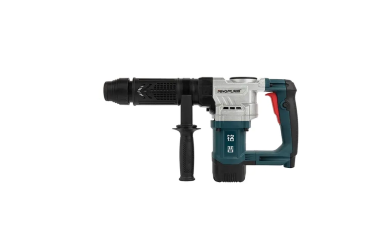
The right choice of tool depends heavily on the specific indoor project.
Light models (5–10 kg): Suitable for removing tiles, plaster, and light masonry.
Medium-duty models (10–15 kg): A balanced choice for most indoor tasks, such as floor and wall demolition.
Heavy-duty models (15–30 kg): Necessary only for very thick slabs or reinforced walls, typically in industrial or commercial settings.
For most indoor home projects, a medium-duty corded demolition hammer offers sufficient power without the difficulties of handling oversized equipment in confined spaces.
The choice of bit or chisel has a direct effect on performance.
Flat chisels: Best for lifting tiles or removing thin layers.
Point chisels: Effective for starting cracks or breaking apart stone.
Wide chisels: Useful for covering larger surfaces like flooring.
Most corded demolition hammers use SDS-Max or hex shank systems, ensuring secure attachment and fast bit changes. Selecting the right bit not only makes the job easier but also extends the life of the tool.
Working indoors often means operating in tighter spaces. Ergonomic features help maintain comfort and precision. Look for:
Adjustable side handles for better balance.
Anti-vibration systems to reduce strain.
Manageable weight to allow overhead work when necessary.
Comfort and handling are just as important as raw power when it comes to effective indoor demolition.
Before starting, preparation is key to avoiding damage and minimizing cleanup.
Remove furniture and appliances where possible.
Cover floors and remaining items with thick protective sheets.
Seal doors and vents with plastic sheeting to prevent dust migration.
Ensure adequate lighting so you can see clearly in dusty conditions.
Spending extra time preparing the space will save hours of cleanup later.
When operating a corded demolition hammer indoors:
Work systematically in small sections instead of tackling large areas at once.
Apply steady pressure without forcing the tool; let the hammer do the work.
Take regular breaks to rest and to prevent overheating of the tool.
Be mindful of walls or floors connected to load-bearing structures to avoid damaging essential supports.
Post-demolition, proper cleanup and tool care are essential.
Clear debris gradually rather than waiting until the end.
Use industrial vacuums to collect fine dust from surfaces.
Inspect the hammer for wear, especially around the chuck and cord.
Apply lubrication as recommended by the manufacturer to maintain smooth operation.
Good maintenance ensures that your corded demolition hammer remains reliable for future indoor projects.
Pros | Cons |
Provides continuous power for long tasks | Generates significant noise indoors |
Strong impact energy for concrete and masonry | Produces high levels of dust |
More durable than cordless models | Limited mobility due to the cord |
Cost-effective for repeated renovations | Requires careful safety and dust precautions |
The table highlights the balance between efficiency and the extra precautions needed for safe indoor use. While corded demolition hammers provide excellent performance, they must be managed responsibly to offset dust, noise, and cord limitations.
Yes, you can use a demolition hammer indoors, and a corded demolition hammer is often the most reliable choice. With continuous power, high impact energy, and durable construction, corded models are ideal for removing tiles, breaking walls, or preparing floors for renovation.
To achieve the best results indoors, it is important to:
Choose the correct size and power rating for your project.
Select the right chisels for the materials you are working on.
Control dust and debris with proper preparation and cleanup.
Wear appropriate safety gear and ensure good ventilation.
By following these guidelines, a corded demolition hammer becomes more than just a tool—it becomes a dependable partner for efficient and precise renovation work.
If you are looking for high-quality demolition hammers designed for both professional contractors and DIY users, we recommend Yongkang Mingpu Industry and Trade Co., Ltd. The company offers durable and powerful corded demolition hammers that combine efficiency with long service life. Their tools are built to meet the demands of indoor and outdoor projects alike. For more information or to explore their product range, consider contacting their team directly to find the perfect solution for your needs.


